
The western classical canon is full of Germanophone giants: Beethoven, Schumann, Bach, Schubert, Wagner, Brahms, Strauss, Mendelssohn, and Handel, among others. With some exceptions, the aforementioned are remembered for their orchestral contributions. This is perhaps no coincidence since the symphony was the metric for measuring “great” composers from “good” ones. After Beethoven’s death in 1827 and Schubert’s in 1828, aspiring symphonists attempted to take up the charge of filling the open-endedness created by the two men’s final works.
But these giants create looming shadows that obscure the statures of hundreds of other figures. Tonight, we have two examples. Haydn’s 1791 symphony may fall within the temporal frame of the long 19th century, but the music clutches onto a courtly Classical Era sound. Bruckner’s Symphony No. 6, on the other hand, provides an ambitious assemblage of symphonic forces as fin-de-siècle techniques of tonality shifted towards the experimental avant-garde.
Compositional voices marginalized from this lineage include the women bearing the names of male relatives who benefited from institutionalized male privilege. The overshadowed figures also include peoples of color denied access to classical institutions for centuries and who continue to confront the barriers to entry that accompany expectations of classical music-making. So, we frame this evening as a prompt for considering the symphonic voices that animate your own perceptions of so-called “classical music.” What do we hear? What do we not hear? How can we learn to hear the music on the margins of our listening?
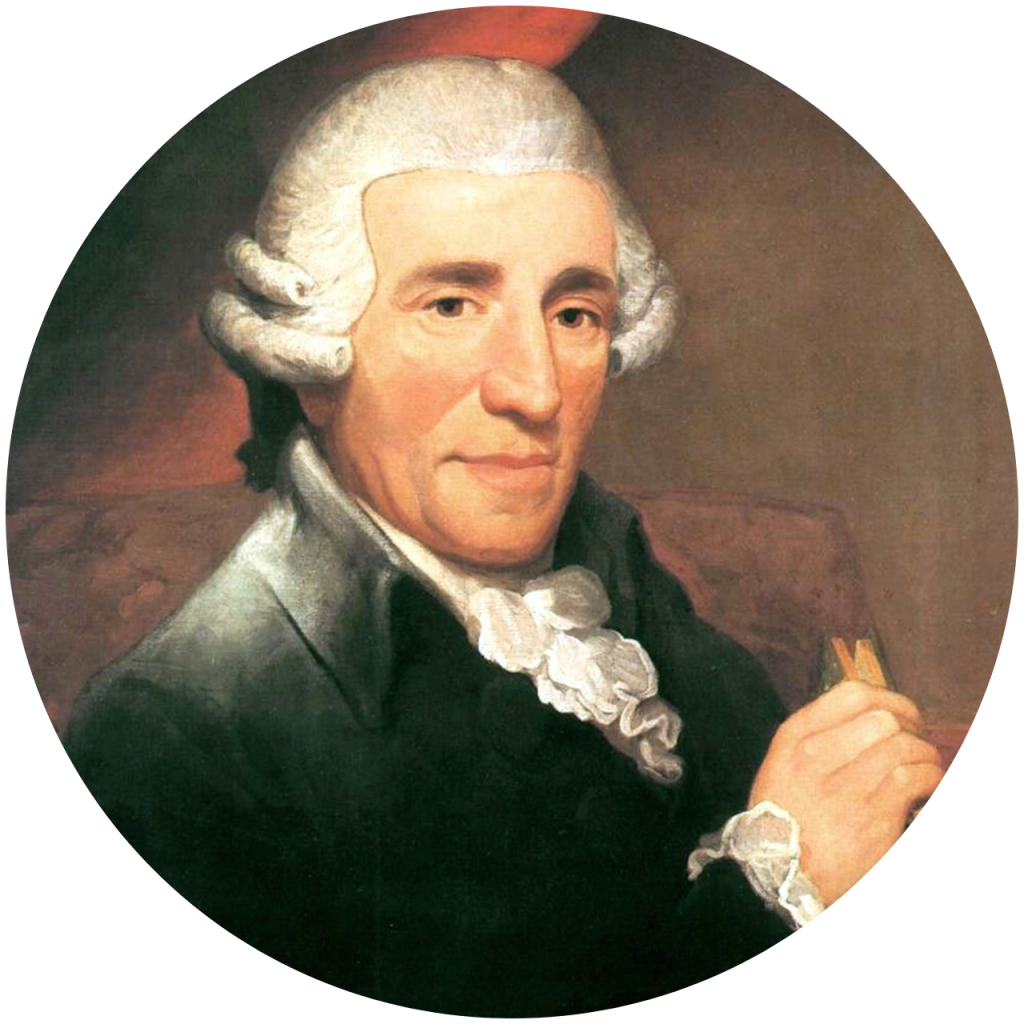 Symphony No. 95 in C minor (1791, 20 minutes)
Franz Joseph Haydn
Born March 31, 1732; Rohrau, Austria
Died May 31, 1809; Vienna, Austria
If you had been in London’s Hanover Square Rooms 220 years ago, you and your fellow concertgoers would have been surprised. The Father of the Symphony had been warmly received by Londoners during his first extensive stay there. As on previous nights, crowds flocked to see him conduct his compositions from the podium. With audiences waiting with bated breath in the performance hall, Haydn lifts his baton. What meets the ears at the beginning of the first movement are five accented pitches suggesting a c-minor harmony: then, a ripe measure of rests.
“But the slow introduction: where is it?” one member mutters.
“I say!” another calls out. “What of the key? How dark and full of mysterious gravitas!”
Indeed, this is the only of Haydn’s London symphonies in a minor key and without the slow introduction typical for late 18th-century symphonies. In other respects, Haydn holds true to expectations of form and counterpoint that are still used as models of quintessential symphonic composition today.
Despite the C minor opening, the music moves into the relative E=major key to initiate a fairly standard sonata form. The expository material comprises two theme groups. The primary theme playfully emphasizes strong downbeats, whereas the secondary theme hovers lyrically in C major. The second movement transforms that lyricism into its own lighthearted main melody. Though, this lightheartedness falls to a minor key after an extensive cello solo and several cycles of theme and variations. Some liveliness returns during the third movement. Named after a French and Italian courtly dance, the minuet at the beginning is in an austere minor mode. But the trio provides contrast via plucked strings, a bouncing cello line, and a move to the major mode. The movement ends with a return to material from the minuet. The raised eyebrows at the symphony’s beginning albeit vanish with the arrival of the delicately interwoven counterpoint throughout the fourth movement.
“It ended in the major mode, no?” one man might have inquired on his way home.
“Yes?” his wife responds tentatively, unsure of what her husband suggests.
“Seems strange to deem a symphony as in the minor mode, even though Haydn places our ears in major keys at every turn.”
As they walked, she thought of the numerous piano sonatas she had learned which ended in different keys than they began. Often, the rule for determining the key was to look at the ending cadences. But she also remembered pieces that looked to the beginning to determine tonality. How could both “rules” be true and possible?
“I suppose it must be a quirk of our music-making,” she says with dissatisfied resignation. “Would you have heard it differently had Papa Haydn labeled it otherwise?”
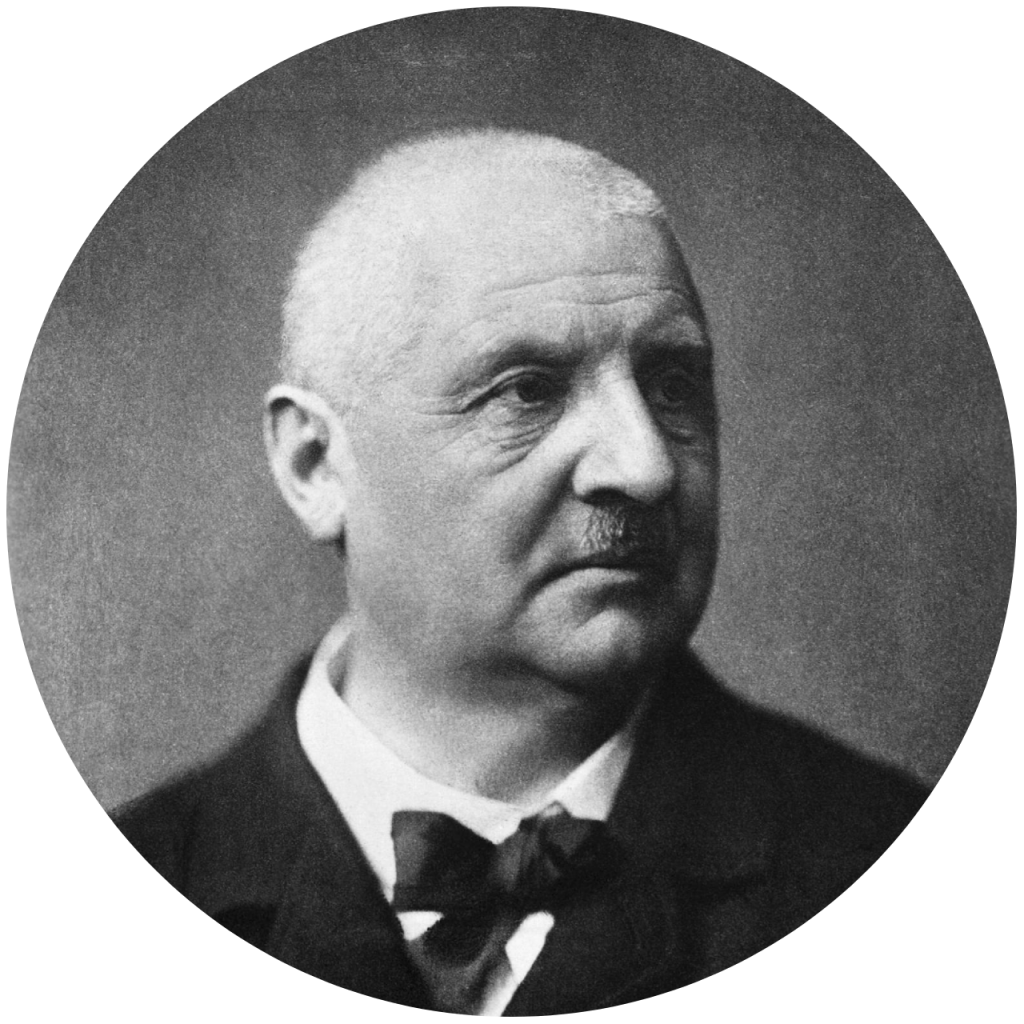 Symphony No. 6 in A major (1881, 60 minutes)
Anton Bruckner
Born September 4, 1824; Ansfelden, Austria
Died October 11, 1896; Vienna, Austria
Critics in Anton Bruckner’s time referred to his Sixth Symphony as lacking “virtuosity.” The sense of virtuosity to which they refer was a slight towards Brucker’s resistance to intensely fast instrumental lines or extreme dynamic contrasts. But, in fact, Bruckner adeptly fused memorable melodies, beloved formal structures, and reconfigurations of tonal conventions at the twilight of the nineteenth century.
The tempo of the first movement invokes the Latin term “maiestis” (sovereign power). The opening theme bear a magisterial march-like touch established by overlapping rhythms to create a wall of hemiola. Bright brass interjections also feature prominently, as they do throughout the symphony. The second theme in the movement, passed amongst upper strings and high brass, is smoother and accompanied by an undercurrent of pulsing low strings. Following a brief development section, the long recapitulation repeats the opening theme before moving into a coda that flows through a variety of keys. Ultimately, after moving through the circle of fifths using a vaguely Star Wars-esque theme, the starting key of A major eventually arrives as the tonal center.
Slow and solemnly, the second movement features several luxuriating themes. Each is densely orchestrated with strings and concluding with warm French horns lushly filling out the texture, most clearly near the movement’s end. In the scherzo third movement, the indication of “nicht zu schnell” (not too fast) allows room for the triplet rhythms to provide a deliberate sense of motion. This deliberateness spirals into an arrangement of a Ländler, a triple-meter Austrian folk dance. Here, Bruckner continues exploring shifting key centers and various timbres by juxtaposing plucked strings, warm brass, and woody winds. With utmost grandeur and confidence in the final movement, Bruckner draws out suggestions of the first movement’s themes before closing with declamatory assertions of the tonic harmony in the brass.
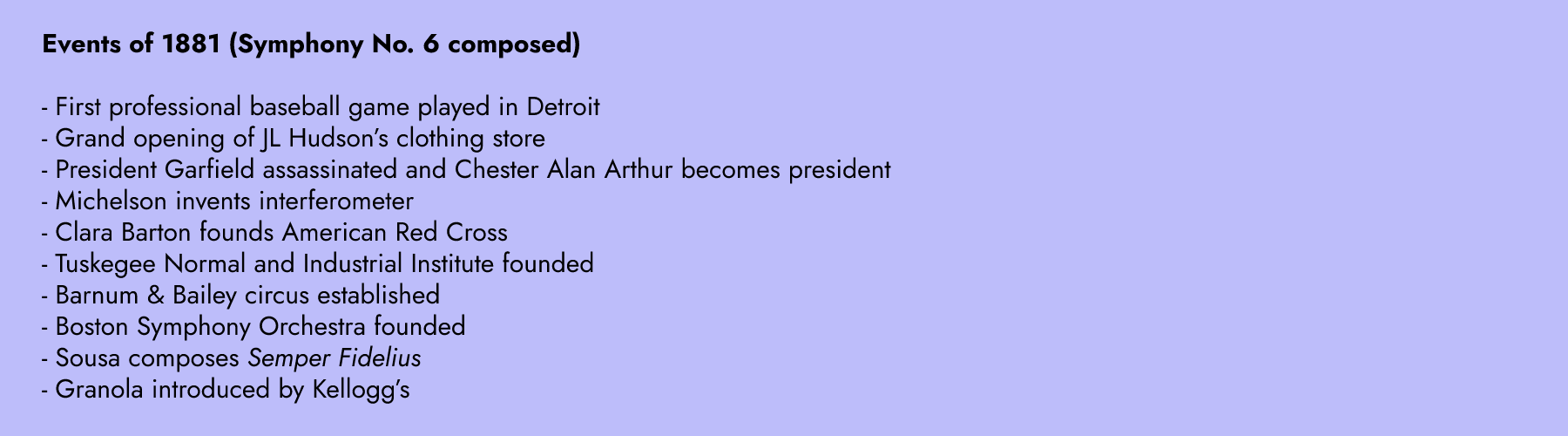
Even though he followed in Beethovenian and Wagnerian footsteps, Bruckner was not well-received in his lifetime. He was criticized for lengthy, repetitive melodies and for frequently revising and republishing, in addition to criticisms leveraged against his Catholic faith. His reception did benefit from the rise of audio technologies throughout the 1900s. But the endurance and positive posthumous reception of Bruckner is in part because Nazi Germany upheld his musical output as embodiments of an innate Germanic folk identity rooted in Austro-Hungarian-ness.
Bruckner and his legacy remind us that music has always been used towards a variety of ends, often without creators’ consent or awareness. We easily forget how and why certain musics fill our airways more than others. The challenge is to consider how to reconcile differences between expectation and surprise, intention and reception, or beautiful artworks being mobilized in service of harmful agendas. Music is never just music for its own sake. A story, a history, and a legacy lie just beyond the surface of the score.
==================
Cana F. McGhee is currently a PhD candidate in Historical Musicology at Harvard University. An Atlanta native, she earned her BA in Music and French from Emory University in 2019. There, she completed thesis work about the song cycles of composer Gabriel Fauré (1845-1924) in the context of linguistic politics in France and Belgium. Currently, she focuses on musical engagements with natural science, climate change, and environmental activism. Apart from her academic life, she also enjoys choral singing, running, and writing short stories.